



Work is in a strange place right now.
For some people, it’s treated like religion. Young founders are going “monk mode”, swearing off dating, leisure, and anything else that might interrupt the holy act of building. Employees are embracing the “infinite workday”, checking emails before sunrise and replying to Slack notifications long after dinner.
At the very same time, work is also being treated like a chore. We got “quiet quitting”, burnout memes, “lazy girl jobs”, and entire corners of TikTok dedicated to surviving corporate life with the minimum possible psychic damage.
And then there are those who cannot even get in. For them, work is neither religion nor chore. It is a locked door.
One thing is certain: whether work is being worshipped, endured, or denied, everyone seems to be making content about it.
But this is not just about people making content at work. It points to something stranger: people using content to narrate a professional life that no longer comes with a stable script. Careers are less linear, AI is making skills feel temporary, and the boundary between who we are and what we do has more or less dissolved.
Work is no longer just a route to stability. It has become entertainment.
Scroll TikTok or LinkedIn for five minutes and the genre becomes obvious: “day in the life” vlogs, layoff confessionals, desk setup tours, founder diaries, quitting videos, “corporate girlie” routines, productivity hacks delivered by visibly exhausted people.
The office has become content. Burnout has become character development.
Meet The Cast
Every reality format needs archetypes. Love Island has the bombshell and the fuccboi. Work-life-as-reality-TV has the believer, the disillusioned, and the accidental star.
The believer is the easiest to spot: finance creators, founder-mode disciples, and 100-hour-week diarists turning exhaustion into proof of proximity to power. Their content feels like HBO’s Industry with a TikTok filter: 5AM wake-ups, desk lunches, aggressively optimised meal prep, and late-night emails filmed like battle scars.
 Tiktok failed to load.
Enable 3rd party cookies or use another browser
The paradox of grind content is that it claims to critique the machine while making the machine look aspirational. The creator looks exhausted and deeply unwell, yet the comments are still full of people asking how to break in.
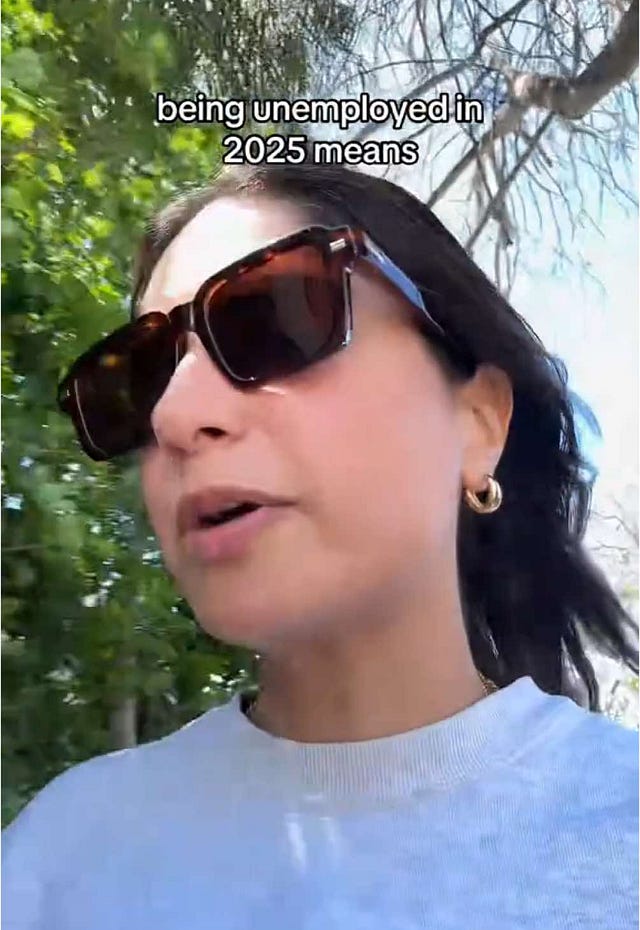
Then there is the disillusioned: unemployed creators, rejection diarists, and “day in the life while unemployed” vloggers turning professional uncertainty into episodic content. They post rejection emails, interview spirals, and application counts so high they start to feel mathematically impossible.
 Tiktok failed to load.
Enable 3rd party cookies or use another browser
These videos are not compelling because unemployment is entertaining. They are compelling because they turn private failure into public structure. In the absence of career progression, the content diary becomes the progression.
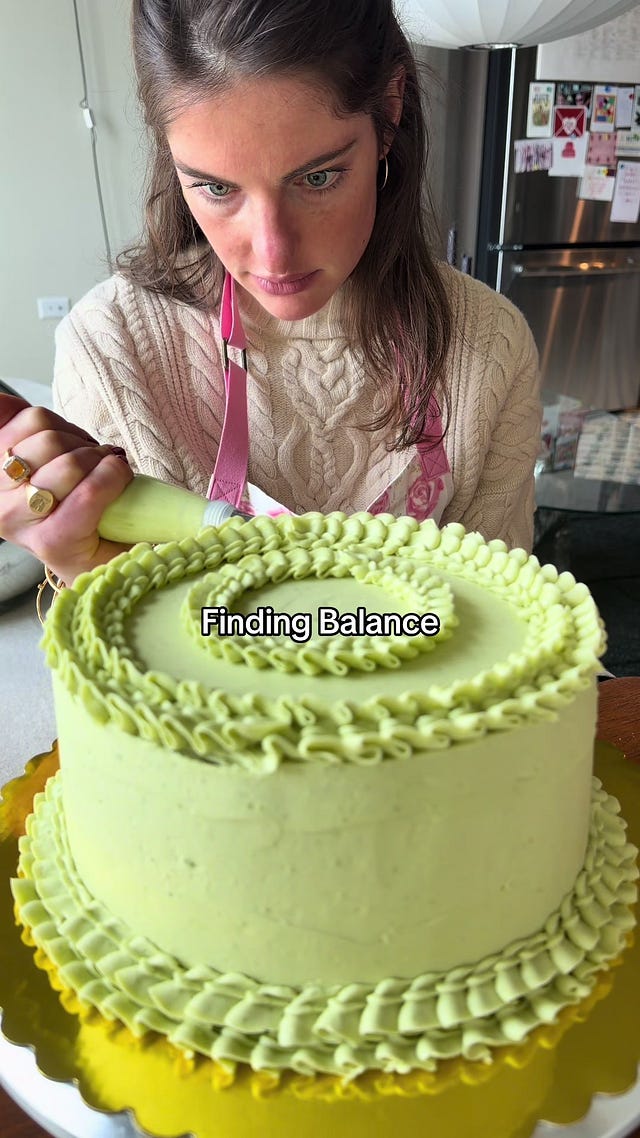
Then there is the accidental character: the people who become protagonists without meaning to.
Take “Investment Baker”, the former Goldman Sachs analyst whose baking side-content eventually became more compelling than the finance job itself. Or “Staples Baddie”, whose DITLs filmed behind the checkout transformed retail work into recurring entertainment.
The interesting thing about these characters is that audiences only really care once the official version of work starts to crack. People do not want the employer brand. They want the leak, the side-eye, the off-script moment, the tiny human rupture inside the corporate machine.
Why Is Everyone Broadcasting?
The obvious answer is instability.
AI has intensified the fear of falling behind. Career ladders now look more like obstacle courses. Entire workflows are changing in real time. The expectation is no longer simply to do your job, but to constantly optimise yourself alongside it.
But the deeper reason people are broadcasting work is because they are trying to regain narrative control.
Work once offered a reasonably legible story: study, get hired, progress, become stable. That story still exists, technically, but fewer people fully believe in it anymore.
So people are building their own narrative structures instead.
The founder vlog, the rejection diary, the office skit, the brainstorm behind-the-scenes: all of them turn instability into episodes. They make uncertainty visible, repeatable, and easier to emotionally process.
In the world of work-as-reality-TV, character becomes currency. The personal brand starts to look less like vanity and more like insurance.
People are no longer just performing their jobs. They are performing their employability, ambition, resilience, burnout, and ability to survive all of it with enough charisma to hold attention online.
Can Brands Legitimately Tune In?
Yes. But carefully.
This is not permission to turn employees into unpaid micro-influencers. The lesson is not “make office content”. The sharper read is that audiences increasingly respond to brands that feel emotionally legible, process-visible, and human enough to let the seams show.
That is why brands like Nude Project work. The founders regularly place themselves at the centre of the brand universe, turning business-building into entertainment through consultancy meltdowns, Zoom bootlegs, and self-aware entrepreneurial theatre.
The appeal is not just the product. It is the feeling that you are watching the brand build itself in real time.
UK sneaker brand No Two Ways does something similar by documenting messy brainstorms and creative process rather than just polished outputs. Here, process becomes proof.
That is the real opportunity for brands. Not to aestheticise office culture, but to understand that people are increasingly drawn to visible process — and the theatre of it all.
Work-life-as-reality-TV is not really about the office.
It is about what happens when work becomes too unstable to quietly contain our hopes, anxieties, humiliations, and ambitions, so all of it spills online instead.
The founder turns discipline into mythology. The employee turns routine into character. The job hunter turns rejection into community.
Everyone is trying to make their labour legible.
James Davis is a Strategist and the founder of BOX EYE STUDIO. You can find him on LinkedIn.
The Millennial Career Crisis as reality show, yet another example. Narrating through uncertainty just nails it. This was such a great read. And in fact it becomes extremely comforting to watch other ppl do it. So we invest in those stories. It’s not even aspirational, I don’t think; almost the more you have no idea what you’re doing or what’s next, the more compelling it is. We might want resolution but it doesn’t seem like we’re in a rush to watch ppl get there. It’s high drama.