


It’s the Women’s Euros! Or more specifically, it’s the first semi-final between England and Italy tonight. But even this far into the tournament, it feels like it hasn’t had the same cultural cut-through as other major sporting events.
Mainstream interest in women’s football is growing, but it still feels niche. According to The Drum, 68% of fans only discovered the sport in the last five years. That includes a large portion of Gen Z, 40% of whom started following after 2022 – which makes sense, given their age, but also highlights how recent mainstream engagement really is.
Behind the scenes, though, this year’s tournament is breaking records: 21 global and national sponsors, and commercial revenue up 112% to €32.5 million. But most of that money is coming from big corporates (Axa, Visa, Amazon, Booking.com) brands with little real connection to the communities behind the game, let alone the culture of football itself. The commercial appetite is clearly there. So why doesn’t it feel bigger?
What’s missing isn’t brand presence – it’s cultural presence. The kind of brands that don’t just show up and slap a logo on something, but shape how people experience the game. The ones that get how football lives in fashion, music, identity and tap into that, not just the airtime.
The Lionesses have become more than just a football team since their 2022 Euros win. Their influence now stretches from the pitch to the high street, with partnerships spanning indie jewellery brands, wellness start-ups, and household names like M&S. They’ve been embraced as symbols of progress, pride, and identity, and not just by football fans, but by the country at large.
But that kind of crossover is still rare on the global stage. Even dominant teams like the U.S. women’s national team, while hugely successful and politically powerful, haven’t always achieved the same level of mainstream, cross-generational appeal – often sparking as much backlash as celebration. Other strong sides like Germany or France are respected on the pitch but lack that broader cultural visibility. And outside of England, most teams are still backed by big-name sports sponsors, with little presence from lifestyle, fashion, or culturally-led brands.
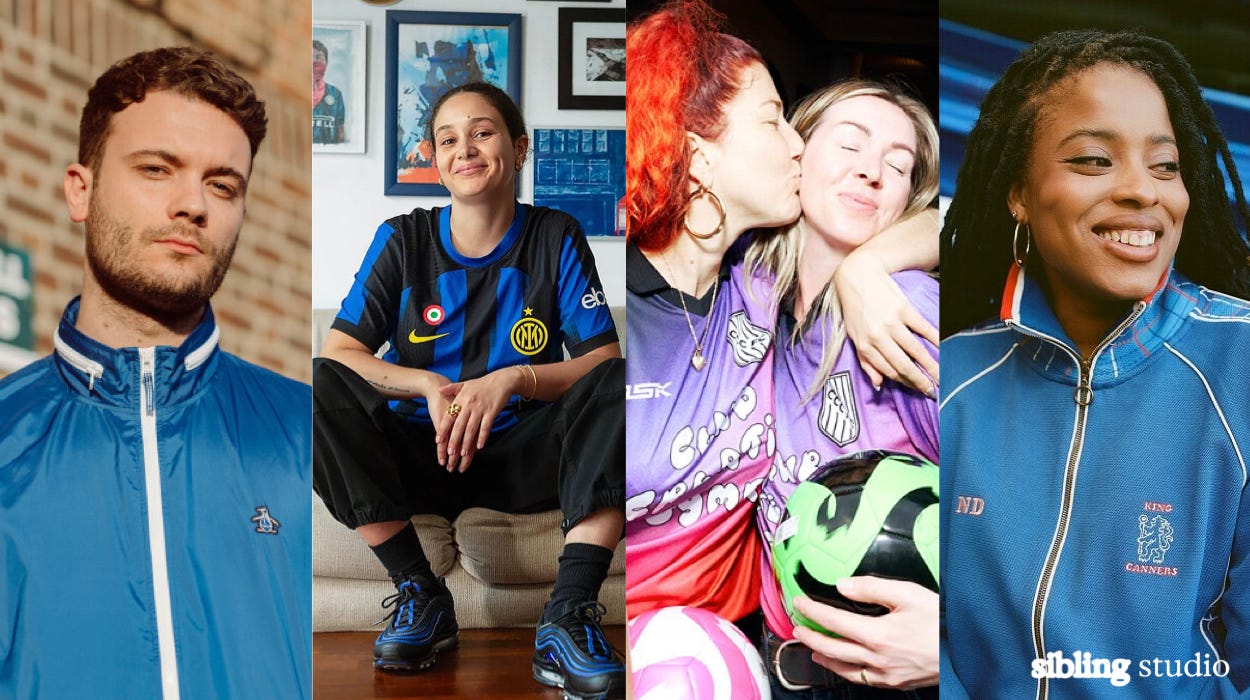
So why have the Lionesses managed to break through in ways others haven’t? And how are brands showing up – or failing to – around this year’s tournament? To find out, we’ve taken a look at the current sponsorship landscape and spoke to four voices working at the intersection of football, culture and strategy: Phie McKenzie, founder of Creative Ally and Co-Founder of Clwb Creative Cymru; Naomi Accardi, co-founder of Systemarosa and Nonsense projects; strategist and podcaster Sam Diss; and Felicia Pennant, Founder and Editor-in-Chief of SEASON Zine.
Brands need to create momentum, not wait for it
Compared to other major sporting events, like the Olympics or men’s football, women’s tournaments are still treated as niche. Brands often wait for the moment to arrive, then scramble to jump on the bandwagon.
“Brands limit their involvement because the immediate financial benefit still isn’t huge,” Diss argues. “It’s seen as a nice-to-have by publishers, whose economic model is built around keeping advertisers happy.”
While sports titles do cover the Women’s Euros, lifestyle media tends to lag behind. “Women’s football is still niche compared to other disciplines,” Accardi points out. “The players haven’t yet reached that level of stardom and that’s why the coverage is limited.”
Pennant adds a key reason for this disconnect: “A lot of the media attention beyond sports-dedicated platforms isn’t organic – it’s sponsored. Until the coverage becomes more organic, it’ll always feel a bit limited.”
But that logic is circular. If media coverage remains dependent on brand budgets, and brands are only investing when there's already traction, we end up stuck in a loop. It becomes a self-fulfilling prophecy: perceived lack of interest leads to limited coverage, which in turn stunts cultural momentum. Brands and media have the power to break that cycle; to shape visibility, shift perception, and build something lasting. But only if they choose to lead, not follow.
Mid-demographic fans are being overlooked
While youth-focused campaigns around participation are increasing, there’s a noticeable gap when it comes to engaging mid-demographic fans; those over 25 who aren't tapped into the grassroots scene. "If you're a fan over 25, beyond kits and the M&S collab, there hasn't really been much out there for you in a meaningful way," says Pennant. "That's where beauty comes in. It's cross-generational, not size-dependent, there are shades for every skin tone, and I think that message of inclusivity naturally aligns with women’s football."
There’s a clear opportunity here. Brands could be doing far more to engage older fans who care deeply about the game but don’t see themselves reflected in the marketing. Beauty, fashion, wellness and travel all offer powerful ways to connect with this audience, not just as consumers, but as part of the cultural fabric of the sport.
Limited by the narrative
Media outlets need to recognise the role they play in shaping the narrative. It starts with the small things, like consistently gendering the word football as women’s football (while men’s football is simply football) and extends to how the sport is framed overall.
“Many stories still – overtly or covertly – lean on women’s sport as a heartwarming enterprise we should pat ourselves on the back for supporting,” says Diss. The tone often implies underdog status, which jars with the reality: the Women’s Euros are attracting record levels of corporate sponsorship.
“Media attention around the tournament has grown,” adds McKenzie, “but lifestyle and pop culture coverage still lags behind events like the Olympics.”
The message is clear: if the media treated the Women’s Euros as core cultural content rather than a side project, the audience would follow. It’s not just about representation; it’s about better storytelling.
Sponsorships test sincerity
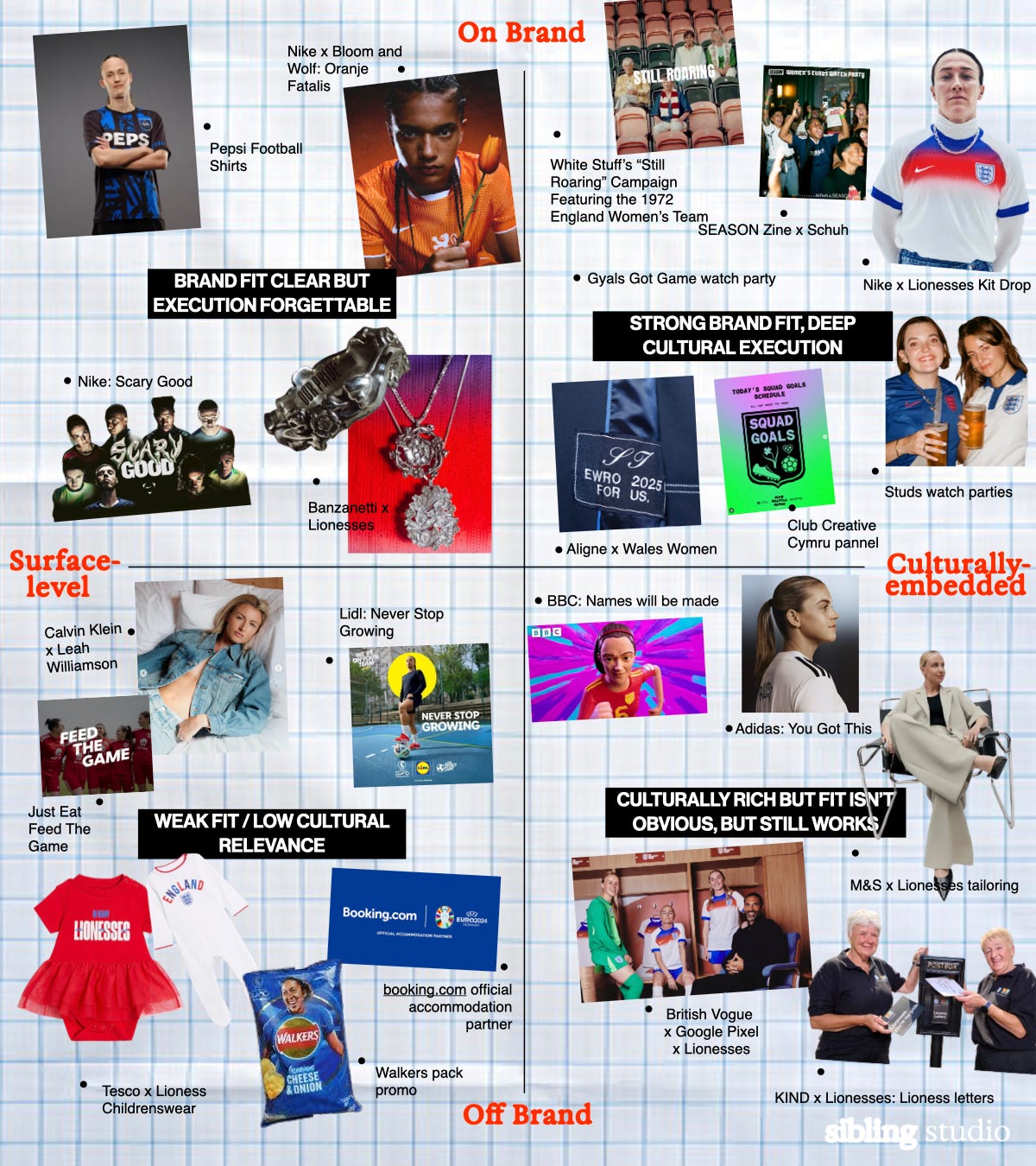
Like any major sporting event, the Women’s Euros has seen a mix of sponsorships – some smart, some lazy. Big names like Amazon and Pepsi, who don’t have an obvious link to the game, still want in. The commercial interest is there.
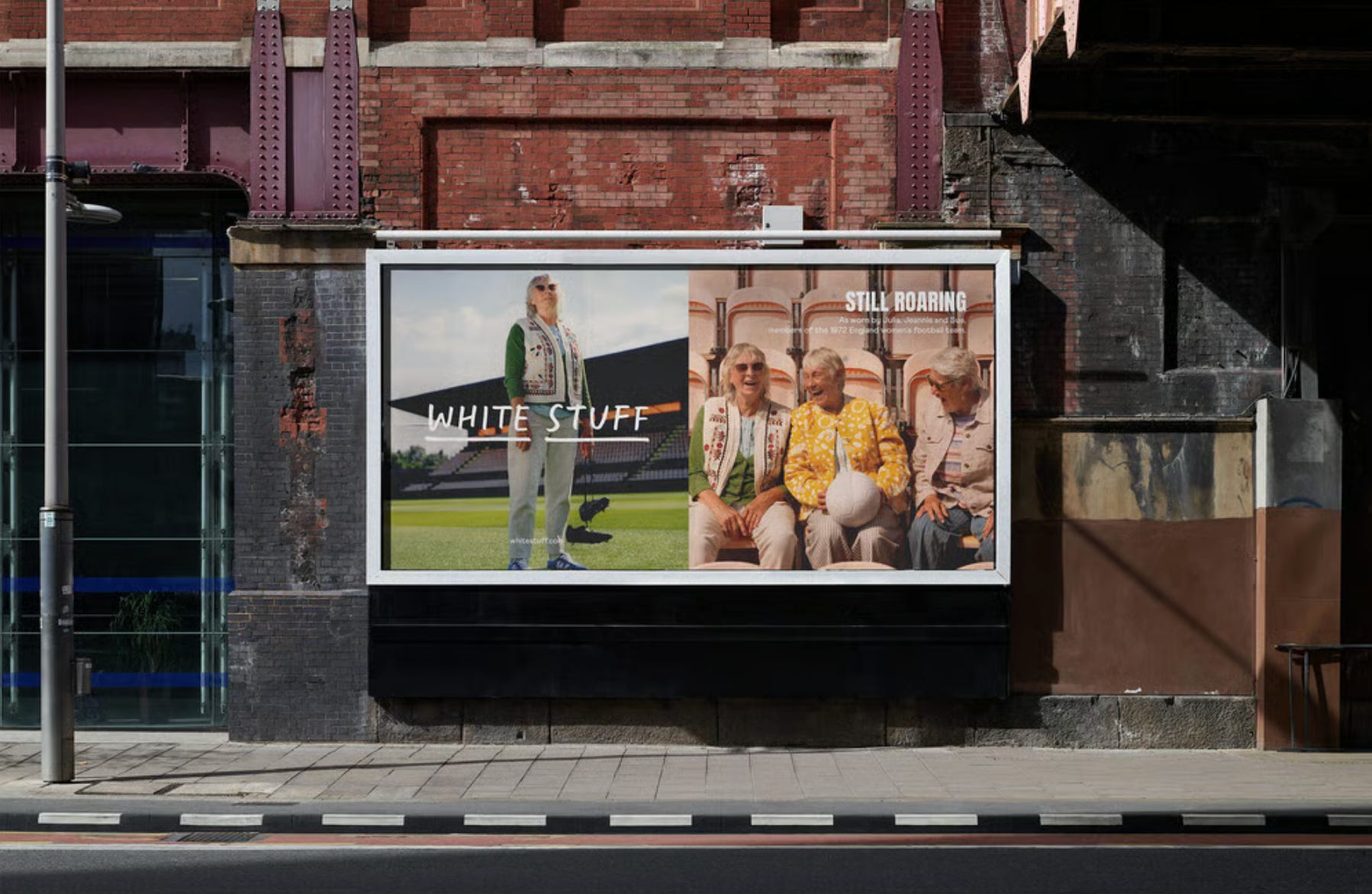
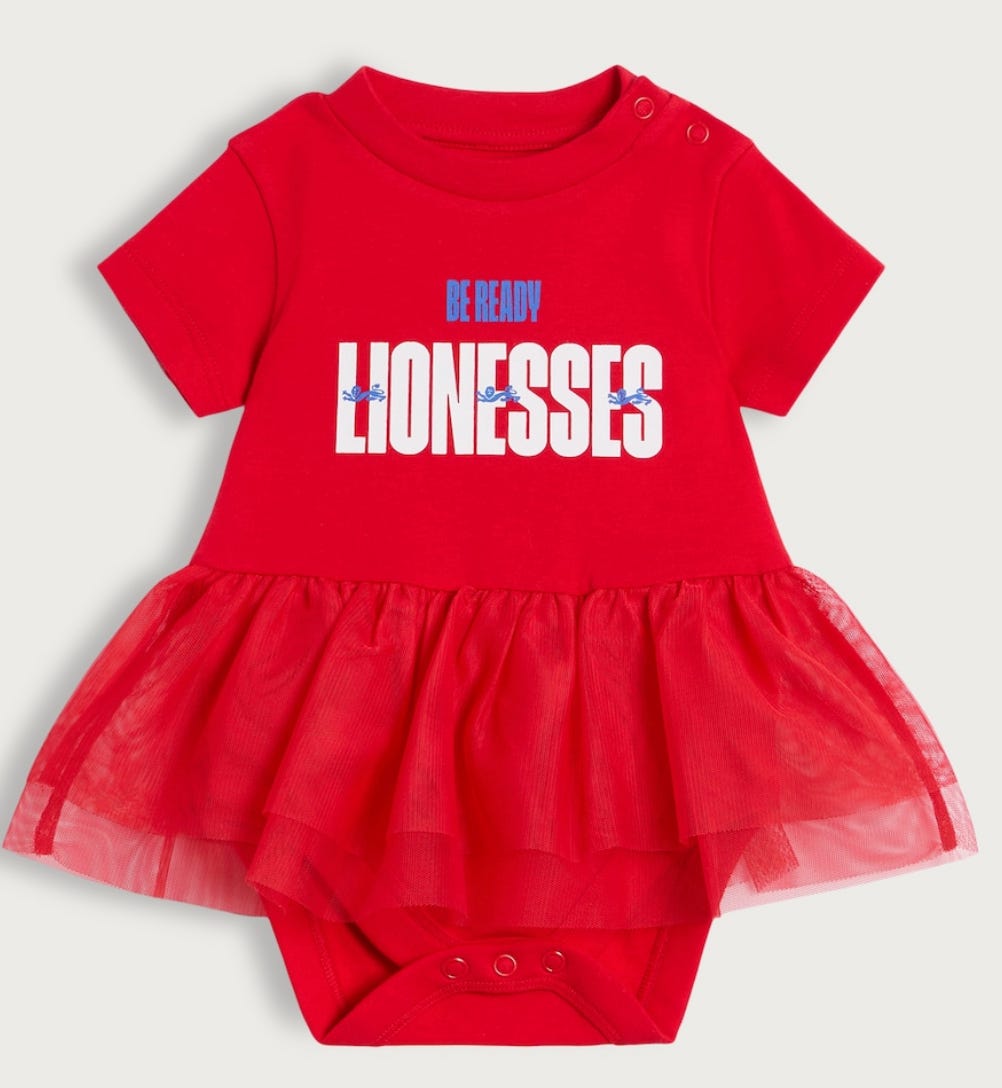
Some collaborations have landed well. White Stuff’s ad, which spotlighted the history of the Lionesses, was surprisingly thoughtful. Others, less so – like Tesco’s Lionesses-themed tutus (!!).
“Too often, brands treat these partnerships as a one-off marketing play, rather than a long-term opportunity for mutual growth,” says Accardi. “Audiences can tell the difference,” adds McKenzie. “They know when something’s surface-level versus rooted in genuine support.”
Pennant agrees: “The brands doing the best partnerships are the ones that are actually showing up. But honestly, I can’t name that many – and that says a lot.” Visibility alone isn’t enough. Audiences are quick to spot insincerity and equally quick to reward brands that show up with care, creativity and consistency.
Creative campaigns don’t match the male counterparts
We all know the drill. If this were a men’s tournament, you wouldn’t be able to open your phone, walk down the street, or pop into big Sainsbury’s without being reminded of it. “If this were the men’s tournament, we’d probably be seeing an inescapable blockbuster film by now,” says Diss.
The Lionesses have had some lifestyle moments, but they’re still largely treated as a unit rather than individual stars. “There’s a missed opportunity for more storytelling around the players themselves,” says McKenzie. “They haven’t reached the same level of stardom because the creative stage hasn’t been set for them,” adds Accardi.
If we want women’s football to shape culture in the same way men’s sport does, it needs the same level of ambition: big ideas, bold storytelling, and platforms that elevate talent as individuals, not just as a team.
Community is key
Among this year’s brand activations, one approach stood out: genuine collaboration with grassroots initiatives like SEASON Zine, Gyals Got Game, and Studs. In Hoxton, Adidas hosted Women’s Euros watch party takeovers with Indivisa.
“Each day was led by a different grassroots community,” says McKenzie. “Clwb Creative Cymru hosted one evening with a fully Welsh lineup, giving us space to showcase our voice and experience in both football and creativity.”
“It’s taken nearly 10 years for what we’ve been doing at SEASON – championing grassroots, style, identity and community in football – to even begin hitting the mainstream,” says Pennant. “But the joy and energy at our watch parties and pub takeovers shows what’s possible when brands partner with platforms that already have that cultural connection.”
These communities have fan belonging at their core. That’s where culture is built – not in boardrooms or marketing decks, but in real-life spaces where people come together, connect, and care. For brands, starting there means stepping into culture with humility and purpose, not just presence. It's not about being seen, it's about being part of something.
So what needs to change?
Women’s football deserves to be marketed at the same commercial scale as the men’s game, but the approach can’t be copy-paste. The parameters are different. There’s no one-size-fits-all formula.
Legacy, joy, and cultural relevance should sit at the heart of these campaigns. Because women’s football has always been about more than just the game – and it's time the marketing caught up.
The next step? Stop treating women’s football like a spin-off. The audience is there. The stories are there. What’s needed now is commitment; to creativity, to consistency, and to communities. That’s how culture is built. And that’s what will make it last.
Sibling Studio is a strategy partner to brands and businesses doing good work. If you’re looking for sharp strategic thinking, get in touch hello@sibling.studio.
Yesss such an important conversation. I really thought the euros would have more cut through this year after 2022 but if anything it felt bigger 3 years ago - I wonder if part of that was still the novelty of ~coming together~ irl at the pub/ mates houses post Covid
Really enjoyed this read! This is such a relevant discussion; thank you for sharing it!